Keeping your fish tank clean is not just about making it look good. A clean tank is critical for the health of your fish. Many new aquarists worry about cleaning the tank while their fish are still inside. The truth is, you don’t have to remove your fish every time you clean.
In fact, moving fish can stress them and even cause health problems. With the right method, you can safely clean your aquarium, keep your fish happy, and avoid unnecessary stress for both you and your aquatic pets. This guide will show you how to clean a fish tank without removing the fish, using clear steps, practical examples, and tips that even beginners often overlook.
Why You Should Clean With Fish Inside
Taking fish out of the tank for cleaning may seem safer, but it’s often riskier. Fish are sensitive to changes in their environment. Moving them can cause stress, injuries, and even death in some cases. Also, when you transfer fish, you usually put them into a smaller, temporary container. The water in this container may not match the temperature or chemistry of their main tank, which can further harm your fish.
Cleaning the tank with fish inside keeps their world stable. By following the right process, you remove harmful waste and algae while keeping your fish safe and calm. This method also saves time and effort.
What You Need Before You Start
Before you begin, gather your cleaning tools. Using the proper equipment makes the job easier and safer for your fish.
Essential Tools
- Algae scraper or pad (suitable for glass or acrylic tanks)
- Gravel vacuum (also called a siphon)
- Bucket (used only for aquarium cleaning)
- Dechlorinator (water conditioner)
- Aquarium-safe glass cleaner (optional, for outside glass only)
- Water testing kit (for checking ammonia, nitrite, nitrate, pH)
- Replacement water (treated to remove chlorine/chloramine and matched to tank temperature)
- Fish net (in case you need to gently move a fish temporarily)
Optional Items
- Aquarium-safe sponge (for corners and decorations)
- Aquascaping tongs (for rearranging plants or decorations)
- Aquarium-safe gloves (protects your hands and prevents contamination)
Having these tools ready before you start prevents interruptions and reduces stress for your fish. Always use equipment that is dedicated only to your aquarium—never use household cleaning supplies, as they can leave toxic residues.
Step-by-step: Cleaning A Fish Tank Without Removing Fish
Cleaning your tank can be broken down into manageable steps. Each step focuses on a specific area while minimizing disturbance to your fish.
1. Unplug Electrical Equipment
Start by unplugging all electrical equipment, such as heaters, filters, and lights. This prevents electric shock and protects your devices if water splashes.
2. Clean The Inside Glass
Use an algae scraper or pad to gently remove algae from the tank walls. Move slowly, especially near your fish. For tough spots, a razor blade (for glass tanks only) can help, but avoid acrylic tanks as this can scratch them.
3. Remove And Clean Decorations
If you see heavy algae on rocks or decorations, remove them carefully. Scrub them in old tank water, not tap water, to avoid killing helpful bacteria. If you clean all decorations at once, you may disrupt the tank’s biological balance.
4. Vacuum The Substrate
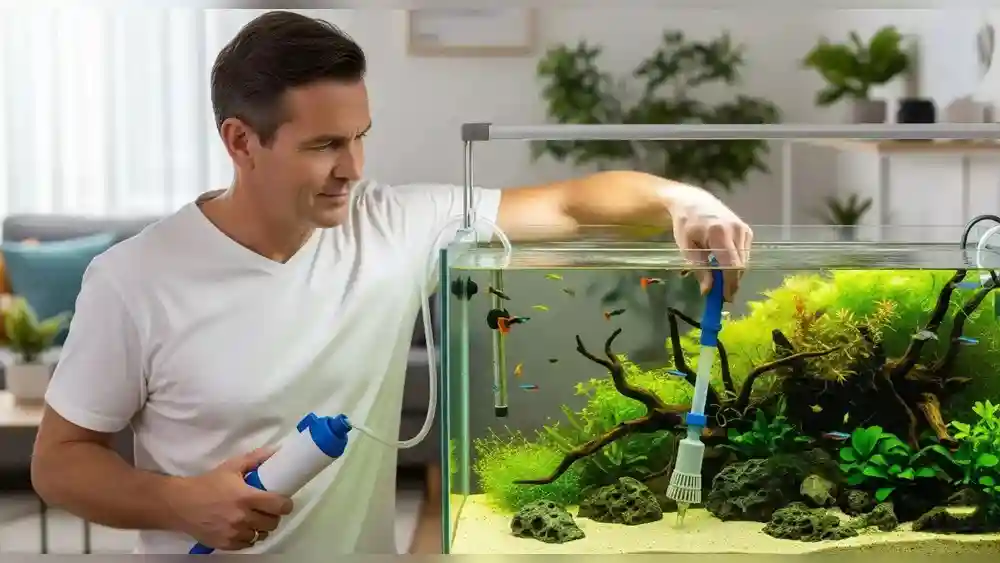
A gravel vacuum is your best friend for removing uneaten food, fish waste, and plant debris from the tank bottom. Insert the siphon into the substrate and let gravity pull dirty water into your bucket. Move the vacuum slowly to avoid stirring up too much debris or startling your fish.
How Much Water To Remove?
Aim to change 10–25% of the tank water during regular cleaning. This amount keeps the water healthy without stressing the fish. For heavily stocked or very dirty tanks, you can go up to 30%, but avoid removing more unless there’s an emergency.
5. Clean The Filter (but Not Now!)
Don’t clean your filter at the same time as the tank. Wait at least a week between filter and tank cleaning. The filter holds beneficial bacteria that help break down fish waste. Cleaning both at once can cause an ammonia spike, which is dangerous for your fish.
6. Refill With Treated Water
Add fresh water that matches the temperature of your tank and has been treated with a dechlorinator. Pour the water slowly to avoid disturbing your fish or substrate. Some aquarists use a plate or bowl to break the flow of water and minimize disturbance.
7. Wipe Down The Outside
Use an aquarium-safe cleaner or a damp cloth to clean the outside glass. Never spray cleaners near the tank opening, as fumes can harm your fish.
8. Restart Your Equipment
Plug in your heater, filter, and lights. Check to make sure everything is working correctly and that the water temperature is stable.
Water Parameters: Why They Matter
A clean tank is not just about what you see. The water parameters you can’t see—like ammonia, nitrite, nitrate, and pH—are even more important. Poor water quality is the number one reason fish get sick.
After cleaning, test your water. The ideal readings for a typical freshwater aquarium are:
| Parameter | Ideal Range | What It Means |
|---|---|---|
| Ammonia | 0 ppm | Toxic even at low levels |
| Nitrite | 0 ppm | Toxic, causes breathing problems |
| Nitrate | <40 ppm | Safe at low levels |
| pH | 6.5–7.5 | Most community fish prefer this range |
If you find high levels of ammonia or nitrite, do another partial water change and check your filter.
:strip_icc()/how-to-clean-a-dirty-fish-tank-1380968-bd21f97b03ac48afaf9b6fe442f73d1f.png)
Credit: www.thesprucepets.com
Comparing Cleaning Methods
It’s helpful to know how cleaning with fish inside stacks up against removing them. Here’s a quick comparison:
| Method | Stress to Fish | Risk of Injury | Water Stability | Time Needed |
|---|---|---|---|---|
| Clean with Fish Inside | Low | Low | High | Short |
| Remove Fish First | High | Medium | Low | Long |
As you can see, cleaning with fish inside is safer and quicker for both you and your pets.
How Often Should You Clean Your Fish Tank?
The right cleaning schedule depends on your tank size, number of fish, and type of setup. Most tanks need a partial water change and cleaning every one to two weeks. Nano tanks or heavily stocked tanks may need more frequent attention. Always watch for signs like cloudy water, algae growth, or unhealthy fish—these mean you may need to clean sooner.
Common Mistakes To Avoid
Even experienced aquarists make mistakes when cleaning their tanks. Here are some common errors and how to avoid them:
- Using soap or chemicals inside the tank or on equipment. These can be deadly for fish.
- Changing too much water at once. This can shock your fish.
- Cleaning filter and tank at the same time. This removes too much beneficial bacteria.
- Not matching water temperature. Sudden changes can stress or kill fish.
- Ignoring water parameters. Visual cleanliness doesn’t always mean healthy water.
A less obvious mistake: many beginners forget to clean under decorations and plants, where waste can build up. Also, failing to clean the tank rim and lid can lead to mold and bad odors.
Tips For Stress-free Cleaning
- Move slowly and calmly. Quick movements scare fish.
- Turn off aquarium lights during cleaning to reduce stress.
- Feed your fish a small snack before cleaning—they’ll be less active and easier to work around.
- Use a gravel vacuum with a built-in flow control for smaller tanks.
- For sensitive species, clean the tank in sections (one half each week) instead of all at once.
Real-world Example
Let’s say you have a 20-gallon freshwater community tank with six small fish and some live plants. Every week, you:
- Unplug the filter and heater.
- Use an algae pad to wipe the glass.
- Siphon 20% of the water while vacuuming the gravel.
- Rinse a couple of decorations in old tank water.
- Add new, treated water at the same temperature.
- Plug everything back in and test the water.
This whole process takes about 30–40 minutes and keeps your fish healthy and the tank looking great.
How Clean Is Clean Enough?
You might wonder if you need to scrub every bit of algae or reach every corner. The answer is no. Some algae is normal and even healthy, as it’s a sign of a balanced tank. Removing every trace can actually harm your tank’s ecosystem.
Aim for a tank that is mostly clean, with clear water and healthy, active fish. Decorations and glass should be mostly free of visible waste and algae, but small spots are not a problem.
Advanced Tip: Deep Cleaning Without Removing Fish
If your tank needs a deeper clean (for example, after a large algae bloom), you can still keep your fish inside. Do the cleaning in stages:
- Clean one area at a time, waiting a few days between each part.
- Use multiple small water changes instead of one big change.
- Add live plants, which help absorb excess nutrients and improve water quality.
For more details on advanced aquarium care, the experts at Aquarium Co-Op offer great resources.
Frequently Asked Questions
What If My Fish Seem Stressed During Cleaning?
Turn off the lights and move slowly. If a fish hides or shows stress, give it time to relax. Avoid direct contact and loud noises. If stress continues, try cleaning in smaller steps next time.
Can I Use Tap Water To Refill The Tank?
Yes, but always treat tap water with a dechlorinator before adding it to your tank. Chlorine and chloramine in tap water are toxic to fish and beneficial bacteria.
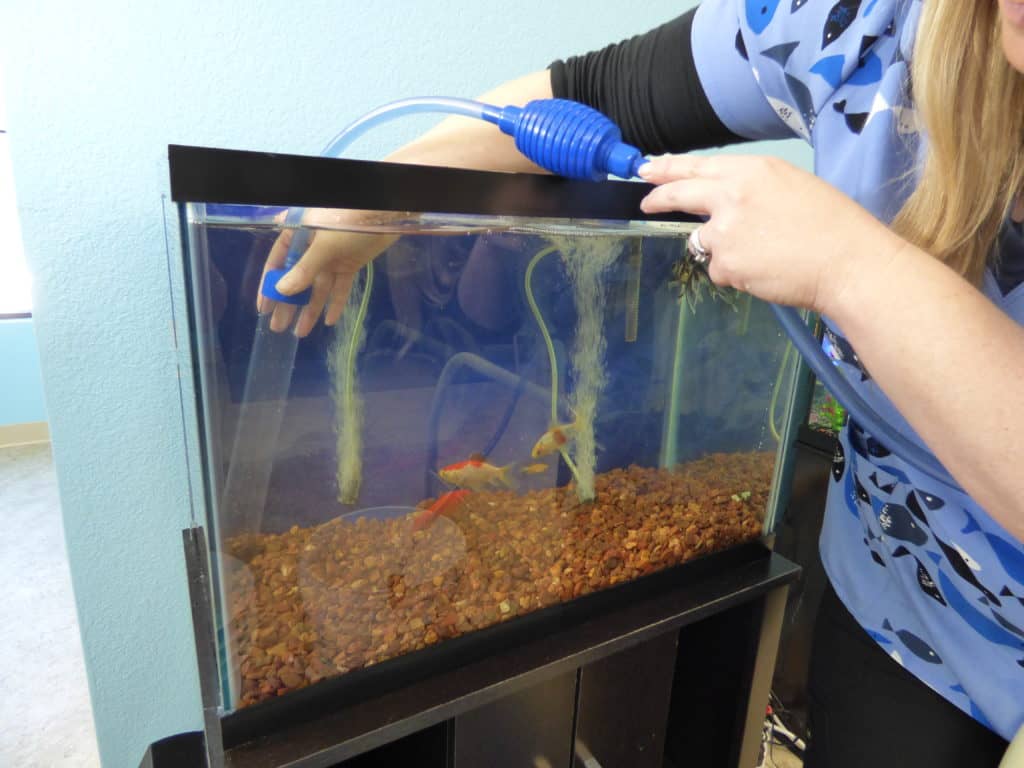
Credit: cafishvet.com
How Do I Clean Aquarium Plants Without Harming Them?
Gently wipe leaves with your fingers or a soft brush. For tough algae, soak plants in a weak solution of aquarium-safe hydrogen peroxide for a few minutes, then rinse well in tank water.
Should I Remove The Fish If I Need To Do A Deep Clean?
Usually no. For most situations, clean in stages and do several small water changes. Only remove fish if there is a disease outbreak or the tank is in very poor condition.

Credit: www.youtube.com
How Do I Know If My Tank Needs Cleaning?
Watch for signs like cloudy water, algae buildup, bad smells, or fish acting strangely. Regular water tests can also show when cleaning is needed.
Cleaning your fish tank without removing the fish is not only possible but is often better for your aquatic pets. By following these steps, using the right tools, and watching your fish for signs of stress, you’ll keep your tank healthy and your fish happy.
With a little practice, aquarium cleaning becomes a quick and easy routine. Your fish will thank you with bright colors and active swimming for years to come.