Artificial grass is becoming a popular choice for homeowners who want a green, low-maintenance lawn all year round. One common question that comes up is whether vinegar can damage artificial grass. Many people use vinegar as a cleaning solution or weed killer, but there are concerns about its effects on synthetic turf. If you’re considering using vinegar on your artificial lawn, it’s important to understand the facts, possible risks, and best practices. This article explains everything you need to know, including practical advice, expert insights, and answers to the most common questions.
What Is Artificial Grass Made Of?
Before looking at how vinegar interacts with artificial grass, let’s understand what artificial grass is made from. Most synthetic turf uses one or more of these materials:
- Polyethylene: Feels soft, looks realistic, and is UV-resistant.
- Polypropylene: Cheaper, but less durable; often used in putting greens.
- Nylon: Very strong, handles high temperatures, but feels less natural.
These fibers are tufted into a backing, usually made from latex or polyurethane, to hold the blades in place. An infill—often sand or rubber granules—goes between the blades to support them and keep the grass upright.
Why Use Vinegar On Artificial Grass?
Vinegar is a popular home cleaner because it’s natural, cheap, and easy to find. People use vinegar on artificial grass for several reasons:
- Weed Control: Kills weeds that grow around or through seams.
- Cleaning: Removes pet urine, stains, and bacteria.
- Odor Removal: Neutralizes bad smells, especially from pets.
Vinegar is usually diluted with water and sprayed onto the grass. But does this common solution pose any risks?
Credit: northeastsyntheticturf.com
How Vinegar Affects Artificial Grass
Chemical Properties Of Vinegar
Vinegar contains acetic acid, usually about 5% in household vinegar. Acetic acid is strong enough to kill weeds and bacteria, but it’s much weaker than industrial acids. Still, it can affect some materials, especially if used in large amounts or left to soak for long periods.
Potential Impact On Synthetic Turf
Most artificial grass fibers are resistant to mild acids. Polyethylene and polypropylene handle weak acids like vinegar well and do not break down easily. Nylon is a bit more sensitive, but household vinegar usually won’t cause damage if rinsed off.
However, the backing (latex or polyurethane) and infill materials can be more vulnerable. Overuse of vinegar, or letting it sit for hours, might weaken the backing over time. The infill could also break down or clump if exposed repeatedly to acids. This can affect the support and lifespan of your turf.
Real-world Data And Examples
Manufacturers and turf installers rarely report major damage from occasional vinegar use. But repeated, heavy use—especially without rinsing—can cause:
- Fading or discoloration
- Backing becoming brittle
- Infill degradation
In practice, occasional, diluted vinegar is unlikely to harm your artificial grass. Problems usually come from overuse, high concentration, or poor rinsing.
Comparing Vinegar To Other Cleaning Solutions
It’s helpful to see how vinegar stacks up against common alternatives for cleaning artificial grass.
| Cleaning Solution | Effectiveness | Potential Damage | Cost |
|---|---|---|---|
| Vinegar (diluted) | Good on odors, bacteria, minor stains | Low (if rinsed) | Low |
| Bleach | Strong disinfectant | High (fades color, degrades fibers) | Low |
| Enzyme Cleaners | Excellent for pet messes | Very Low | Medium |
| Soapy Water | Good general cleaner | Very Low | Low |
As you can see, vinegar is generally safe when compared to harsh chemicals like bleach, but it’s not always the gentlest option available.
Safe Ways To Use Vinegar On Artificial Grass
If you decide to use vinegar, follow these steps to minimize risks:
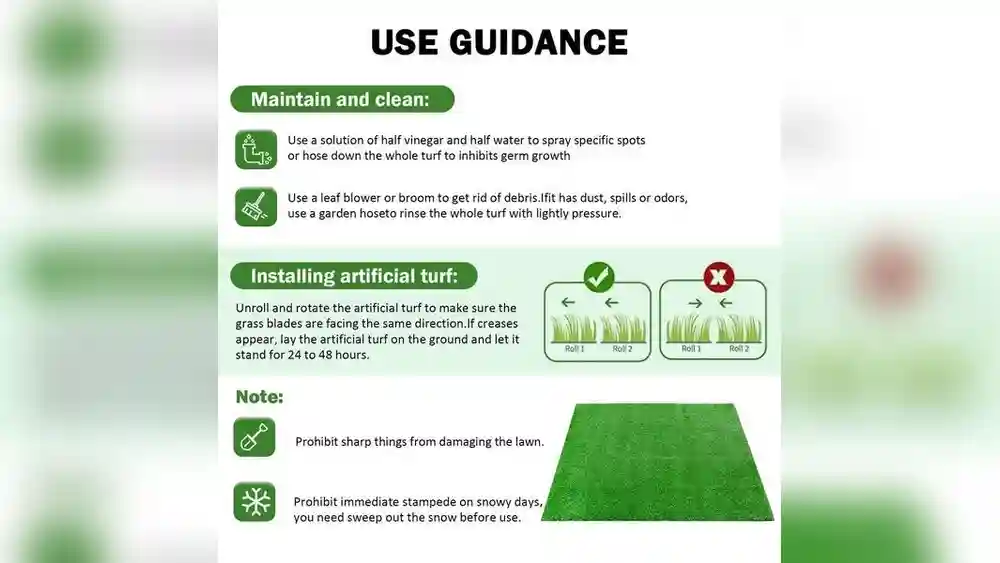
- Dilute Vinegar: Mix one part vinegar with one part water. This reduces acidity.
- Spot Test First: Spray a small, hidden area and wait 24 hours. Check for any discoloration or damage.
- Apply Sparingly: Only use vinegar where needed—on stains, odors, or weeds.
- Rinse After Application: Use a hose to wash off vinegar after 10–15 minutes. This prevents buildup.
- Avoid During Hot Weather: Acid can react faster in heat, so apply in the morning or evening.
Practical Example
Suppose your dog urinates on your artificial lawn, and the smell lingers. Mix 1 cup vinegar with 1 cup water, spray the area, let it sit for 10 minutes, then rinse thoroughly. This removes odor without harming your lawn.
Risks Of Overusing Vinegar
Even though vinegar is mild, overuse can cause problems:
- Weakens Backing: Acid left on the backing can shorten turf life.
- Affects Infill: Repeated vinegar can cause rubber infill to break down or clump.
- Attracts Weeds: If you kill weeds but don’t rinse, soil and organic matter may collect, encouraging more weeds.
Overuse also increases the chance of lingering acetic acid in your yard, which can hurt nearby plants or alter soil pH.

Credit: www.perthartificialgrass.com
Manufacturer Guidelines And Warranties
Most turf manufacturers do not recommend vinegar as a regular cleaning solution. They often suggest:
- Using water and mild soap
- Sweeping debris regularly
- Avoiding harsh chemicals, including bleach and strong acids
If you use vinegar and damage occurs, your warranty might not cover repairs. It’s wise to check your turf’s care guide or contact the installer before using any new cleaning method.
How Does Vinegar Compare To Other Weed Killers?
Some people use vinegar as a natural weed killer instead of chemical products. But how does it compare?
| Weed Killer | Effectiveness | Safety for Turf | Environmental Impact |
|---|---|---|---|
| Vinegar (household) | Good on young weeds | Safe if rinsed | Low impact |
| Commercial Herbicides | Very effective | Can damage turf and infill | Higher impact |
| Boiling Water | Good on small weeds | Safe (may melt some turf) | None |
| Manual Removal | Highly effective | Completely safe | None |
Vinegar is safer than most herbicides for artificial grass, but it’s not the only option. Manual weed removal, or using boiling water for small weeds, is safest but more time-consuming.
Common Mistakes To Avoid When Cleaning Artificial Grass
Many turf owners make simple mistakes that could shorten the life of their synthetic lawn:
- Using undiluted vinegar: Too strong and may damage backing.
- Skipping the rinse step: Leaves acid on turf, causing buildup.
- Cleaning in hot sun: Can increase fading or chemical reactions.
- Using bleach or ammonia: These chemicals damage color and fibers.
- Not checking manufacturer’s instructions: Could void your warranty.
The biggest mistake is thinking all “natural” cleaners are safe in any amount. Even vinegar needs careful use.
Non-obvious Insights About Vinegar And Artificial Grass
Beginners often miss two important facts:
- Vinegar Can Affect Drainage: If you don’t rinse after applying vinegar, the acid can build up in the infill and backing. Over time, this might block drainage holes, causing water to pool and possibly leading to mold or mildew.
- Vinegar May Leave Residue: Some artificial grass, especially in shady or damp areas, may feel sticky after repeated vinegar use. This residue can attract dust, making your lawn look dull and dirty faster.
Best Practices For Artificial Grass Maintenance
Vinegar is just one tool for keeping your artificial turf clean. Here’s how to keep your lawn looking great:
- Brush regularly: Use a stiff broom to keep blades upright.
- Remove debris: Leaves and organic matter can trap moisture and encourage weeds.
- Spot-clean stains: Use mild soap and water for most spills.
- Rinse pet areas: Hose down urine spots often to prevent odor.
- Inspect seams and edges: Stop weeds or moss before they spread.
If you use vinegar, do it rarely and always rinse. For heavy-duty cleaning, consider professional turf cleaners or enzyme-based products.
Environmental Impact Of Using Vinegar
Many people choose vinegar because it’s eco-friendly. However, even natural products can have side effects. Vinegar in high amounts can lower soil pH, affecting nearby plants. Always avoid letting runoff reach flower beds, vegetable gardens, or natural water sources. When used correctly, vinegar is much safer for the environment than chemical herbicides or bleach.
When Should You Avoid Using Vinegar?
Certain situations call for a different approach:
- Very old turf: Older backing may already be weak and more sensitive.
- Damaged seams or loose infill: Acid can worsen problems.
- Nearby plants: If you have garden beds close to the lawn, vinegar may hurt them.
- New installations: Give new turf time to settle before using any cleaners.
In these cases, stick to water and mild soap, or consult your installer.
Final Thoughts
Vinegar can be a safe, effective cleaner and weed killer for artificial grass—if used properly. The key is moderation: always dilute, spot-test, rinse, and avoid overuse. Most modern turf handles diluted vinegar well, but backing and infill are more vulnerable with heavy, repeated use. For everyday cleaning, water and mild soap are safer choices. When in doubt, check your turf’s care instructions or ask the installer. With the right approach, you can enjoy a clean, green artificial lawn for years—without risking damage from vinegar or other cleaning solutions.
For more details on the science of cleaning artificial grass, see this Wikipedia entry on artificial turf.
Credit: www.jcturf.com
Frequently Asked Questions
Can I Use Vinegar To Clean Pet Urine On Artificial Grass?
Yes, you can use diluted vinegar to clean pet urine and neutralize odors. Mix equal parts vinegar and water, spray the area, let it sit for 10 minutes, then rinse well. Do not use undiluted vinegar or skip rinsing.
Will Vinegar Fade The Color Of My Artificial Grass?
Diluted vinegar, used occasionally and rinsed off, will not fade most modern artificial grass. Overuse or failing to rinse may cause fading, especially in sunlight or with older turf.
Is Vinegar Better Than Bleach For Cleaning Artificial Grass?
Vinegar is much safer than bleach. Bleach can damage fibers, cause fading, and harm the backing. Vinegar is less harsh, but always dilute and rinse thoroughly.
Does Vinegar Kill Weeds In Artificial Grass?
Vinegar can kill young weeds that grow around or through seams. It is less effective on mature weeds with strong roots. Manual removal or boiling water may be better for stubborn weeds.
Can Using Vinegar Void My Artificial Grass Warranty?
Some manufacturers do not recommend vinegar and may void your warranty if damage occurs from its use. Check your turf’s care guide or ask your installer before using vinegar or any new cleaning product.