Keeping your fish tank clean is not just about making it look nice. It’s about keeping your fish healthy and your water safe. Many fish owners wonder: How often should I vacuum my fish tank? The answer depends on the size of your tank, how many fish you have, and the type of setup you use. If you vacuum too often, you may stress your fish or remove helpful bacteria. If you don’t vacuum enough, waste builds up and water quality drops. In this article, you’ll learn exactly how often to vacuum, why it matters, and tips to make your routine easier.
Why Vacuuming Your Fish Tank Is Important
Vacuuming is more than just cleaning. It removes fish waste, uneaten food, and decaying plant matter from the substrate. These things can break down into dangerous chemicals like ammonia and nitrite, which harm your fish. Even if your filter works well, it cannot clean the bottom of the tank. Over time, debris builds up in gravel or sand, causing cloudy water and bad smells.
A regular vacuuming routine keeps the tank healthy. It also helps prevent algae growth and diseases. Many beginners don’t realize that even a clean-looking tank can have hidden waste. Vacuuming also helps you spot problems early, such as sick fish or damaged plants.
How Often Should You Vacuum Your Fish Tank?
There is no single answer for every tank. The right schedule depends on several factors:
- Tank Size: Smaller tanks usually need more frequent cleaning.
- Fish Population: More fish produce more waste.
- Type of Substrate: Gravel traps more debris than sand.
- Filtration System: Strong filters may reduce the need for vacuuming.
General Guidelines
Most home aquariums need vacuuming every 1–2 weeks. For tanks with many fish or messy eaters, once a week is best. Tanks with fewer fish or strong filters can go every two weeks. Very large tanks (over 100 gallons) with advanced filtration may need vacuuming only once a month.
Example Vacuuming Schedules
| Tank Size | Fish Count | Recommended Frequency |
|---|---|---|
| 10 gallons | 5–8 small fish | Weekly |
| 30 gallons | 10–15 medium fish | Every 1–2 weeks |
| 75 gallons | 20+ fish | Every 2 weeks |
| 150 gallons | 30+ fish | Monthly |
Special Situations
- Heavily Planted Tanks: Plants use waste as fertilizer, so vacuum less often, about once a month.
- Bare-bottom Tanks: With no substrate, waste is easy to see and remove. Vacuum once a week.
- Saltwater Tanks: Vacuuming is less common but needed every 2–4 weeks, especially if you see debris.
Signs That Your Tank Needs Vacuuming
You don’t always have to stick to a fixed schedule. Look for these signs:
- Visible debris on the substrate
- Cloudy water or bad smell
- Algae growth on surfaces
- Fish seem less active or hide more
- Water tests show high ammonia or nitrite
If you notice any of these, vacuum right away—even if it’s not your usual time. Trust your eyes and water tests.
Step-by-step Guide To Vacuuming Your Tank
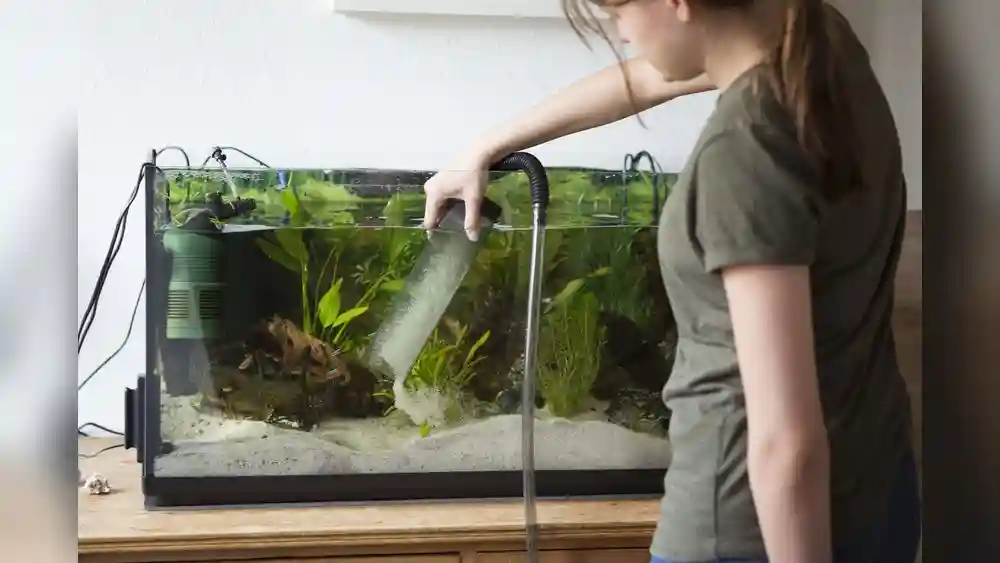
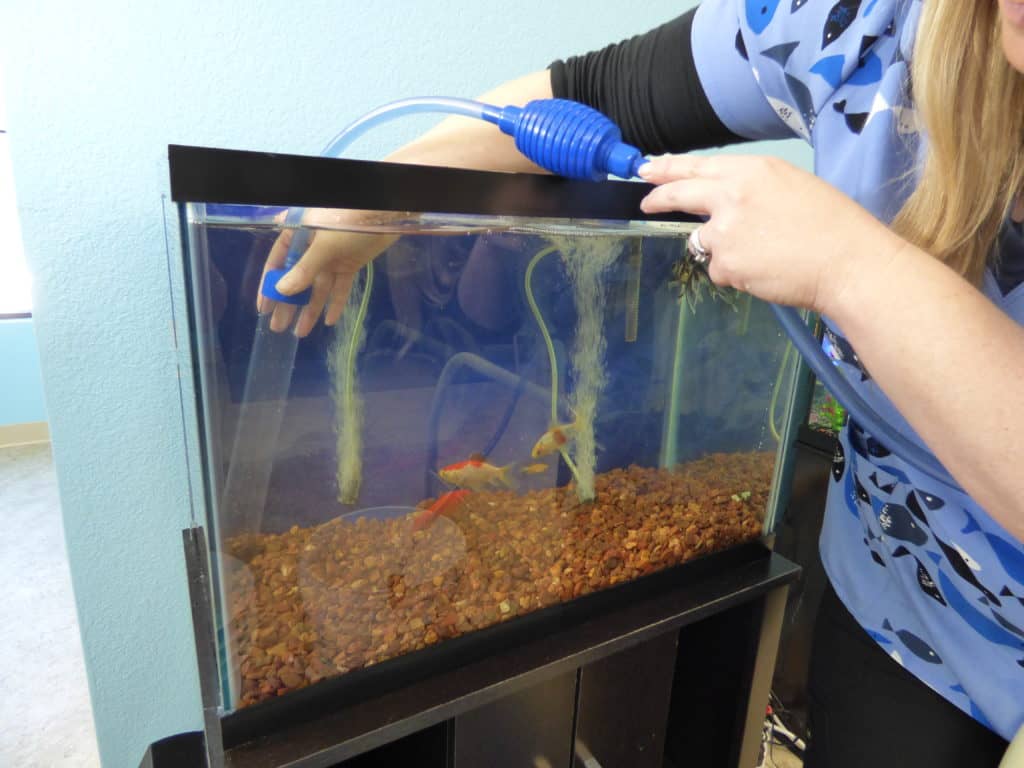
Vacuuming is simple, but doing it right prevents stress and keeps your tank safe. Here’s how:
- Gather Supplies: Get a siphon, bucket, and water conditioner.
- Turn Off Equipment: Switch off filters and heaters to avoid damage.
- Start Siphon: Place the vacuum in the tank and start the flow.
- Move Slowly: Push the vacuum into the substrate, letting debris rise.
- Clean in Sections: Vacuum only one-third to one-half of the substrate each time. This keeps helpful bacteria alive.
- Remove Water: The siphon also removes water, making partial water changes easy.
- Refill Tank: Add new, treated water slowly.
- Restart Equipment: Turn filters and heaters back on.
Practical Tips
- Use a gravel vacuum for gravel tanks and a gentle siphon for sand.
- Avoid cleaning all the substrate at once—this protects the nitrogen cycle.
- Don’t rush. Quick movements stir up debris without removing it.
- For small tanks, remove less water and vacuum more often.
- In large tanks, you may need to move decorations to reach hidden waste.
How Substrate Type Affects Vacuuming
Different substrate types trap waste differently. Gravel is common but can hide lots of debris. Sand lets waste stay on the surface, making it easier to see and remove. Bare-bottom tanks have no substrate, so debris is easy to spot and vacuum.
| Substrate | Ease of Cleaning | Frequency Needed |
|---|---|---|
| Gravel | Moderate | Weekly |
| Sand | Easy | Every 1–2 weeks |
| Bare-bottom | Very easy | Weekly |
| Planted (soil) | Hard | Monthly |
Common Mistakes When Vacuuming
Many beginners make mistakes that harm their tanks. Here are the most common:
- Vacuuming too much: Removing all substrate bacteria can disrupt the tank.
- Skipping water changes: Vacuuming without removing water leaves toxins behind.
- Using untreated water: Always use water conditioner to remove chlorine.
- Ignoring decor: Waste builds up under rocks and plants.
- Vacuuming with fish present: Move slowly; sudden movements stress fish.
One insight that many miss: vacuuming is not just about cleaning—it’s about maintaining the balance of your tank. If you clean too often, you may upset this balance. If you clean too little, the water becomes unhealthy.

Credit: www.youtube.com
How Fish Type And Population Change Your Schedule
Some fish produce more waste than others. For example, goldfish and plecos are messy eaters. Tanks with these fish need more frequent vacuuming. Small fish like neon tetras produce less waste, so you can vacuum less often.
Fish population matters too. A crowded tank means more waste and more frequent cleaning. A lightly stocked tank stays cleaner longer.
| Fish Type | Waste Level | Vacuum Frequency |
|---|---|---|
| Goldfish | High | Weekly |
| Neon Tetra | Low | Every 2 weeks |
| Pleco | High | Weekly |
| Betta | Medium | Weekly |
How To Make Vacuuming Easier
Vacuuming doesn’t have to be hard or time-consuming. Here are some practical tips:
- Use a battery-operated vacuum for quick cleanups.
- Plan your vacuuming during regular water changes to save time.
- Keep a cleaning log to track your routine.
- Remove decorations before vacuuming to reach hidden waste.
- Feed fish only what they eat in 2–3 minutes—less uneaten food means less waste.
A tip many beginners miss: if you schedule your cleaning on the same day each week, your tank stays healthier and your routine becomes easier to remember.
Why Water Testing Matters
Water testing is a key part of fish tank care. Test your water for ammonia, nitrite, and nitrate levels weekly. If any of these are high, vacuum more often. Clean tanks usually have low ammonia and nitrite, and nitrates under 40 ppm.
Many fish owners skip testing, but it’s the best way to know when your tank needs cleaning. Water tests can warn you about problems before they become dangerous.
You can find detailed water testing guides at the Fishkeeping World website.
What Happens If You Don’t Vacuum Enough?
If you ignore vacuuming, waste builds up. This causes:
- High ammonia and nitrite levels
- Sick or stressed fish
- Cloudy water and bad smells
- Algae blooms
- Dead plants
Sometimes, tanks with lots of debris look fine on the surface. But hidden waste damages the water and hurts your fish. Regular vacuuming prevents these problems.

Credit: www.reddit.com
Can You Vacuum Too Often?
Yes, vacuuming too often can be harmful. You risk removing helpful bacteria from the substrate. These bacteria break down waste and keep your water safe. If you vacuum every day, you may upset the nitrogen cycle. Stick to the recommended schedule and only clean one-third to one-half of the substrate each time.
Frequently Asked Questions
How Do I Know If My Tank Needs Vacuuming?
Look for visible debris, cloudy water, bad smells, or high ammonia/nitrite levels. Fish acting strange or hiding can also mean the tank needs cleaning.
Can I Vacuum With Fish In The Tank?
Yes, but move slowly and avoid sudden movements. Most fish will swim away from the vacuum. If you have shy or sensitive fish, you can remove them before cleaning.
What Is The Best Type Of Vacuum For My Tank?
For gravel tanks, use a gravel vacuum. For sand or bare-bottom tanks, use a gentle siphon. Battery-operated vacuums are good for quick cleanups.
Should I Vacuum During Water Changes?
Yes, it’s best to vacuum while doing partial water changes. This saves time and removes dirty water along with the debris.
Is It Okay To Skip Vacuuming If My Tank Looks Clean?
No. Even clean-looking tanks can have hidden waste. Regular vacuuming keeps your tank healthy and prevents problems before they start.
Keeping your fish tank clean is not just about looks—it’s about the health and happiness of your fish. By vacuuming regularly and following the tips above, you’ll have a clear, safe tank and thriving fish. Remember, every tank is different.
Watch your fish, test your water, and adjust your routine as needed. If you keep your tank balanced, your fish will thank you with bright colors and active behavior.
Credit: cafishvet.com