
Buying a vacuum cleaner can be confusing, especially when you want to make your home cleaner and safer for your family. Many people see the words “HEPA filter” on packaging or in ads, but are not sure what it really means or if their vacuum truly has one.
If you want to reduce dust, allergens, or even pet dander in your house, knowing whether your vacuum uses a real HEPA filter is very important. But how can you be sure? Let’s look at the facts, the details, and some insider advice to help you understand HEPA filters and your vacuum cleaner.
What Is A Hepa Filter?
The term HEPA filter stands for High-Efficiency Particulate Air filter. But what does that really mean for your home cleaning? A true HEPA filter can trap at least 99.97% of particles as small as 0.3 microns. To help you visualize, a human hair is about 70 microns thick, so 0.3 microns is incredibly small—much smaller than what you can see with your eyes.
HEPA filters are used in hospitals, laboratories, and clean rooms for good reason. They are designed to capture microscopic particles like pollen, smoke, bacteria, and dust mites. For allergy sufferers, a vacuum with a real HEPA filter can make a big difference in everyday comfort.
But it’s important to know that not all vacuums have true HEPA filters, even if they say “HEPA-like” or “HEPA-style. ” These terms can be confusing, and sometimes misleading.
To make it clearer, imagine you are cleaning a carpet with regular dust, pollen, and some pet dander. A normal filter may catch visible dirt but let the invisible, smaller particles pass through. Over time, these tiny particles can build up in your home’s air, even if the floor looks clean.
With a true HEPA filter, you are not just making the room look tidy; you are actually removing microscopic pollutants that affect your air quality and health.
Some people wonder why 0. 3 microns is the standard for HEPA. This size is known as the “most penetrating particle size” (MPPS). Particles at this size are the hardest for filters to capture, so if a filter can stop them, it will also catch larger and even some smaller particles by different physical processes.
Why Does A Hepa Filter Matter?
The air in your home can contain many invisible particles—dust, pollen, pet fur, mold spores, and even bacteria. Regular vacuum cleaners can suck up dirt from the floor, but without a proper filter, they might blow fine dust and allergens back into the air. This is why a HEPA filter is important. It traps those tiny, harmful particles so they do not escape back into your room.
For people with asthma, allergies, or sensitive lungs, using a vacuum with a real HEPA filter can help reduce sneezing, coughing, and breathing problems. Even if you do not have allergies, a cleaner home means fewer germs and less dust for everyone.
Think about when sunlight streams through your window and you see dust floating in the air. Much of that dust is too small to see, and it keeps moving around unless something captures it. A HEPA vacuum reduces these airborne particles, making your home feel fresher and safer—especially if you have young children or elderly family members who are more sensitive to air quality.
Another benefit: If you have pets, their skin flakes (dander) and hair can cause reactions in sensitive people. HEPA filters catch these particles, which regular filters often miss. Over time, this means less build-up in your carpets and softer surfaces, making cleaning more effective and the air less irritating.
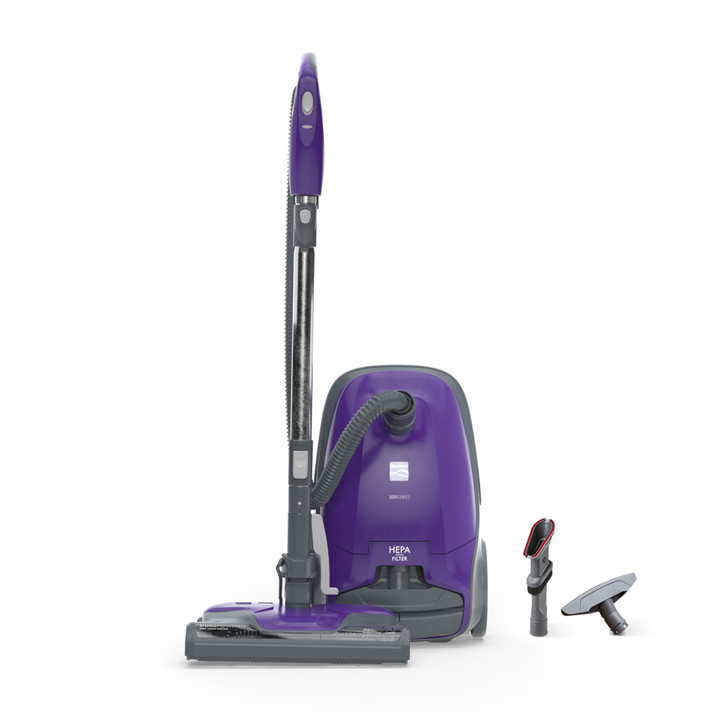
Credit: kenmorefloorcare.com
How To Check If Your Vacuum Has A Hepa Filter
Finding out if your vacuum actually has a HEPA filter can be tricky. Here’s what you need to look for and how you can check for yourself.
1. Check The Vacuum’s Label And Packaging
Start by looking at the label on your vacuum cleaner or the box it came in. Manufacturers usually highlight HEPA filters as a selling point. Look for:
- The word “HEPA” followed by a number or standard (like HEPA 13, HEPA 14)
- Statements like “captures 99.97% of particles 0.3 microns”
- Official seals or certifications
But be careful—some products use terms like “HEPA-type” or “HEPA-like. ” These are not true HEPA filters and do not guarantee the same performance.
If you see “meets EN 1822” or “IEST certified,” that’s a sign of a real HEPA filter. Packaging should be clear, but sometimes it’s hidden in the fine print. If you don’t see a specific efficiency rate or certification, be cautious.
2. Inspect The Filter Itself
Open your vacuum and find the filter. HEPA filters usually look like:
- A thick, pleated paper or fiberglass filter
- A sturdy frame, often labeled with “HEPA” and a serial number
- Sometimes, a sticker or stamp showing the HEPA standard
Compare the filter to images of true HEPA filters online. If it looks very thin, soft, or like regular foam, it is probably not a HEPA filter.
If you’re in doubt, try gently tapping the filter—true HEPA filters are often rigid and hold their shape. Some also have a grid or mesh to keep the pleats in place. The texture and build quality can give you clues about whether it’s real or just “HEPA-like.
”
3. Read The User Manual
The user manual or product guide should clearly state if your vacuum uses a HEPA filter. Look in the specifications section for words like:
- “HEPA filtration system”
- “Certified HEPA filter”
- “99.97% efficiency at 0.3 microns”
If the manual does not mention HEPA at all, your vacuum most likely does not have one.
Sometimes, the manual will also include diagrams or instructions for changing the HEPA filter. This is a good sign. If the manual only mentions “dust filter” or “foam filter,” then it’s not a true HEPA system.
4. Search The Manufacturer’s Website
Most brands have support pages where you can type in your vacuum’s model number. Look for information about the filter system. If the site does not confirm “HEPA,” assume the vacuum does not have it.
Some brands go into detail about their filtration system, and may even show videos or diagrams explaining how the HEPA filter works. Checking the FAQ or support section can save you time and give you extra confidence in your purchase.
5. Identify Filter Certifications
A real HEPA filter is sometimes certified by organizations like the Institute of Environmental Sciences and Technology (IEST) or follows the EN 1822 standard in Europe. If you see these certifications, you can trust the filter is genuine.
These certifications mean the filter was tested in a laboratory setting for its ability to capture very small particles. If you’re buying a replacement filter, check the packaging or the product listing for these labels as well.
6. Contact Customer Support
If you are still not sure, call or email the vacuum’s customer service department. Give them your model number and ask directly, “Does my vacuum use a certified HEPA filter? ”
Good brands will be happy to provide documentation or even send a photo of the filter type. If they cannot confirm, that’s a sign to be cautious. Don’t rely only on salespeople at a store—they may not know the technical details.
What Makes A Filter “true” Hepa?
A true HEPA filter meets strict standards. In the United States, it must remove at least 99.97% of particles measuring 0.3 microns in diameter. In Europe, a similar standard is called EN 1822, which grades filters from E10 (lowest) to U17 (highest).
Here are the main things that make a filter “true” HEPA:
- Particle removal efficiency: Must remove at least 99.97% of 0.3 micron particles
- Tested and certified: Must pass standardized tests for leakage and performance
- Proper labeling: Must say “HEPA” and sometimes the certification number
Some cheaper vacuums use filters that look like HEPA but only remove 85–90% of dust. These are often labeled as “HEPA-type” or “HEPA-style. ” They do not give the same air quality benefits.
Another detail: true HEPA filters are often tested for leaks around the frame and edges. Even a small leak can reduce the filter’s efficiency. Certified HEPA filters are sealed well and made to last for the recommended period. If you see a filter that is very cheap or poorly built, it’s probably not the real thing.
Comparison Of Filter Types
Here’s a quick look at the difference between true HEPA, HEPA-type, and regular filters:
| Filter Type | Efficiency | Captures | Certification |
|---|---|---|---|
| True HEPA | ≥99.97% @ 0.3 microns | Dust, pollen, bacteria, smoke | Yes (officially tested) |
| HEPA-type | 80–90% @ 1 micron | Large dust, some pollen | No |
| Standard Filter | 50–70% @ 3 microns | Larger dirt, dust | No |
A less obvious detail: even some “HEPA-type” filters may improve air quality a little, but they cannot protect people with severe allergies or asthma. The “HEPA-type” label is not regulated, so it can mean almost anything. Always check for testing data when in doubt.
Why The Whole Vacuum System Matters
A real HEPA filter can only do its job if the vacuum is designed well. If there are leaks in the vacuum’s body or poor seals around the filter, dirty air can escape before it passes through the HEPA filter. This is called “bypass leakage.”
For the best results, look for vacuums advertised as “sealed HEPA systems. ” This means all the air goes through the HEPA filter before it leaves the vacuum. Some brands, like Miele and Dyson, are known for this feature.
If your vacuum only has a HEPA filter in the exhaust, but leaks air elsewhere, you lose many of the health benefits.
Some vacuums also use rubber gaskets or foam seals around the filter compartment. These help prevent air from leaking around the filter. When replacing the filter, always check these seals for damage or wear.
A practical example: If you notice dust collecting around the edges of your vacuum or on the handle after cleaning, it may be a sign that the system isn’t sealed well. Even with a real HEPA filter, poor sealing means dirty air can escape before being filtered.
Common Signs That Your Vacuum Has A Real Hepa Filter
Here are some signs that your vacuum uses a true HEPA filter:
- The packaging clearly says “HEPA” with a specific standard (like HEPA 13 or HEPA 14).
- The user manual lists “HEPA filtration” under technical features.
- The filter itself has a label or stamp stating “HEPA.”
- The vacuum is described as a “sealed HEPA system.”
- The manufacturer’s website confirms HEPA certification.
If you see all or most of these, you can be confident your vacuum offers real HEPA protection.
Also, some high-quality vacuums have a small HEPA logo molded into the plastic near the filter compartment. Check for this extra detail.
How To Replace And Maintain Your Hepa Filter
Even the best HEPA filter will stop working well if it is dirty or damaged. Regular maintenance is key for keeping your vacuum effective.
When To Replace
Most HEPA filters should be replaced every 6–12 months, depending on how often you vacuum and how dirty your home is. Some vacuums have washable HEPA filters, but most are disposable.
If you have pets or allergies, consider changing the filter more often—every 6 months is a safe rule for busy homes. For less frequent use or homes without pets, once a year may be enough.
Signs Your Hepa Filter Needs Changing
- Noticeable decrease in suction power
- More dust or odors coming from the vacuum
- The filter looks gray, brown, or clogged
- The vacuum’s indicator light for filter change turns on
Some vacuums also have a small window or color-changing strip on the filter itself. When it changes color, it’s time to replace the filter.
How To Replace
- Turn off and unplug the vacuum.
- Open the filter compartment, usually at the back or side.
- Remove the old HEPA filter carefully (dust may come out).
- Insert the new filter, making sure it fits tightly.
- Close the compartment securely.
Never try to clean a non-washable HEPA filter with water—this can destroy it. Only wash filters marked “washable HEPA. ”
If your vacuum is losing suction even after a filter change, check for blockages in the hose or brush as well. Sometimes, the filter is not the only part that needs attention.
Myths And Misunderstandings About Hepa Filters
There are many common myths about HEPA filters in vacuum cleaners. Here are a few, with the facts:
- “All vacuums with a HEPA filter are the same.”
Not true. Some vacuums have poor seals or only partial HEPA filtration.
- “HEPA-type filters are just as good.”
No—they are much less effective for the smallest particles.
- “You never need to change a HEPA filter.”
False. Dirty filters lose their ability to trap dust.
- “A HEPA filter will remove all odors.”
HEPA filters remove particles, not gases or smells. For odors, activated carbon filters are better.
Some people also believe that a HEPA filter will remove all viruses. While it can trap many types of bacteria and some viruses, it is not a replacement for medical-grade air purification. In homes, it is best for dust, pollen, and pet dander.
How Do I Find My Filter’s Certification?
If you want to be 100% sure your filter is truly HEPA, look for certification information. This may include:
- A test report or certificate from the manufacturer
- EN 1822 or IEST standards
- The percentage efficiency at 0.3 microns
If you can’t find this information, you can ask the manufacturer for proof. Some brands post their test results online, so check their official websites.
For replacement filters, look for a batch or lot number, which means the product was tested in a certified lab. This level of detail is especially important for people with severe allergies.
The Difference Between Hepa 13, Hepa 14, And Other Grades
HEPA filters come in different grades, depending on their efficiency. The higher the number, the better the filtration.
Here’s a summary of common HEPA grades:
| HEPA Grade | Efficiency | Best Use |
|---|---|---|
| HEPA 13 | 99.95% @ 0.3 microns | Home, office |
| HEPA 14 | 99.995% @ 0.3 microns | Medical, laboratory |
| ULPA | 99.9995% @ 0.12 microns | Clean rooms |
Most home vacuums use HEPA 13 or 14. ULPA filters are very rare in consumer products.
If you see “HEPA 12” or lower, that means less efficiency—still good, but not at the level needed for allergy sufferers. For most homes, HEPA 13 is a good balance of performance and price.
Why Do Some Vacuums Advertise “hepa-like” Filters?
Some brands use words like “HEPA-like,” “HEPA-style,” or “99% filtration. ” These are marketing terms and not official standards. These filters usually trap bigger particles, but let many allergens and fine dust pass through.
Always look for official “HEPA” with certification, not just similar-sounding words.
The danger is that “HEPA-like” filters may make you feel safer, but people with allergies or asthma may not get any real benefit. If air quality is important to you, don’t compromise on this detail.
What If My Vacuum Doesn’t Have A Hepa Filter?
If your vacuum does not have a HEPA filter, you still have options:
- Check for upgrades: Some brands sell official HEPA filters that fit older vacuum models.
- Use a HEPA air purifier: This can help clean the air in your home, even if your vacuum is basic.
- Vacuum more often: This reduces dust buildup, but will not remove fine particles as well as HEPA.
- Consider a new vacuum: For allergy and asthma sufferers, upgrading to a true HEPA vacuum is often worth the investment.
You can also use damp dusting or microfiber cloths to trap dust on surfaces, which helps reduce airborne particles between vacuuming sessions.
Hidden Details Most People Miss
Many people believe that adding a HEPA filter to any vacuum will make it “HEPA grade. ” But if the vacuum’s seals are poor, dirty air can leak out and avoid the filter. Always look for “sealed HEPA system” in the product description.
Another thing beginners miss is that some vacuums have a HEPA filter only for exhaust air, but not for the air circulating inside the vacuum. This means you get partial, not full, protection.
Also, when buying replacement filters, don’t assume that all “compatible” filters are equal. Some generic filters do not meet the same standards as the original parts. If you have serious allergies, stick with filters made by the vacuum’s brand.
How To Tell If Your Vacuum Is Losing Hepa Efficiency
Even if your vacuum started with a true HEPA filter, its efficiency can drop over time. Here are two signs to watch for:
- Dusty smell after vacuuming: If you notice a musty or dusty smell, your filter may be full or leaking.
- Increased allergy symptoms: If you or your family start sneezing or coughing more after cleaning, your vacuum may not be trapping allergens effectively.
Replacing the filter and checking for leaks can help restore performance.
Another tip: If your vacuum has a filter change indicator, don’t ignore it. These sensors are designed to warn you before you notice problems. If your vacuum does not have an indicator, mark your calendar to check the filter every 6 months.
Hepa Vacuums For Pet Owners
If you have pets, a HEPA vacuum can be a game changer. Pet hair and dander are common triggers for allergies. A good HEPA filter traps not just fur, but also microscopic flakes of skin (dander) that pets shed.
Look for models with “pet” in the name, which often include extra brushes and strong suction, along with HEPA filtration.
For homes with multiple pets, consider a vacuum with a larger HEPA filter or a bagged design. Bagged HEPA vacuums often release less dust when you empty them, which keeps your air cleaner.
Cost Vs. Benefit Of Hepa Vacuums
HEPA vacuums can cost more than basic models, but the benefits for health are often worth it—especially for allergy sufferers, families with small children, or homes with pets.
If you want to know whether the cost is justified, consider:
- The long-term health impact (fewer sick days, less medicine)
- Reduced dust and cleaning time
- Better air quality for sensitive family members
Some studies show that homes with HEPA vacuums have up to 50% fewer airborne particles than homes using standard vacuums.
Another detail: Many HEPA vacuums are built with higher-quality motors and parts, so they may last longer and need fewer repairs. Over time, this can balance out the higher purchase price.

Credit: store.tineco.com
Real-world Example: Comparing Two Vacuum Models
Let’s compare two popular vacuums—one with HEPA, one without:
| Feature | Model A (HEPA) | Model B (Standard) |
|---|---|---|
| Filter Type | True HEPA 13 | Foam |
| Sealed System | Yes | No |
| Captures Allergens | Yes, 99.95% | No |
| Price | $$$ | $$ |
| Best For | Allergy sufferers, pet owners | Basic cleaning |
Model A, with a true HEPA filter and sealed system, is much better for allergy relief and home air quality.
If you have a family member who is sensitive to dust, investing in Model A may save money on medications or doctor visits. Over a few years, the health benefits can be significant.
How To Choose A Hepa Vacuum Cleaner
If you want to buy a vacuum with a HEPA filter, keep these factors in mind:
- Look for “true HEPA” on the box or in the manual.
- Check for a sealed system—not just a HEPA filter.
- Ask about replacement filters—are they easy to buy and affordable?
- Read customer reviews—do people mention less dust and better air?
- Test the vacuum in-store if possible—does it blow air out the sides? If yes, it might not be sealed well.
Another practical tip: If you have stairs or lots of furniture, look for a vacuum that is easy to carry and has attachments for upholstery and corners. HEPA is important, but so is usability—if the vacuum is hard to use, you’ll clean less often.

Credit: www.amazon.com
Are Hepa Vacuums Worth It?
For people with allergies, asthma, or pets, a true HEPA vacuum is usually worth the extra cost. You get:
- Cleaner air
- Fewer allergy symptoms
- Less dust on furniture
Even people without allergies often say their homes feel fresher after switching to a HEPA vacuum.
A non-obvious benefit: HEPA vacuums can also help your electronics last longer, since less dust settles inside computers, TVs, and other devices. Over time, less dust in the air means less cleaning and maintenance for everything in your home.
Where Can I Learn More?
If you want more technical details, you can read about HEPA standards and testing at the Wikipedia page on HEPA filters.
Frequently Asked Questions
What Does Hepa Stand For?
HEPA stands for High-Efficiency Particulate Air. It is a type of filter that traps at least 99.97% of particles 0.3 microns in size, making it one of the most effective filters for dust, pollen, and allergens.
Can I Upgrade My Vacuum To Use A Hepa Filter?
Sometimes, yes. Some manufacturers sell HEPA filters as optional upgrades for their vacuums. Check the model number and the manufacturer's website to see if a certified HEPA filter is available for your vacuum.
How Often Should I Replace My Hepa Filter?
Most HEPA filters should be replaced every 6 to 12 months, depending on use and the amount of dust in your home. If your vacuum has a washable HEPA filter, follow the cleaning instructions in the manual.
Are All “hepa” Filters The Same?
No. Some filters are labeled “HEPA-type” or “HEPA-like,” but do not meet the true HEPA standard of 99. 97% efficiency at 0. 3 microns. Always look for “true HEPA” and check for official certification.
Do Hepa Filters Remove Odors?
No, HEPA filters trap particles, not gases or smells. For odor removal, look for vacuums that include an activated carbon filter along with HEPA filtration.
A vacuum cleaner is more than just a cleaning tool—it can also improve the air you breathe. Knowing if your vacuum has a real HEPA filter is important for your health, especially if you or your family have allergies, asthma, or pets.
Take the time to check the label, the manual, and the manufacturer’s website. Look for true HEPA certification, and remember that a sealed system is just as important as the filter itself. With the right vacuum, you can enjoy a cleaner, healthier home every day.